What the animation shows
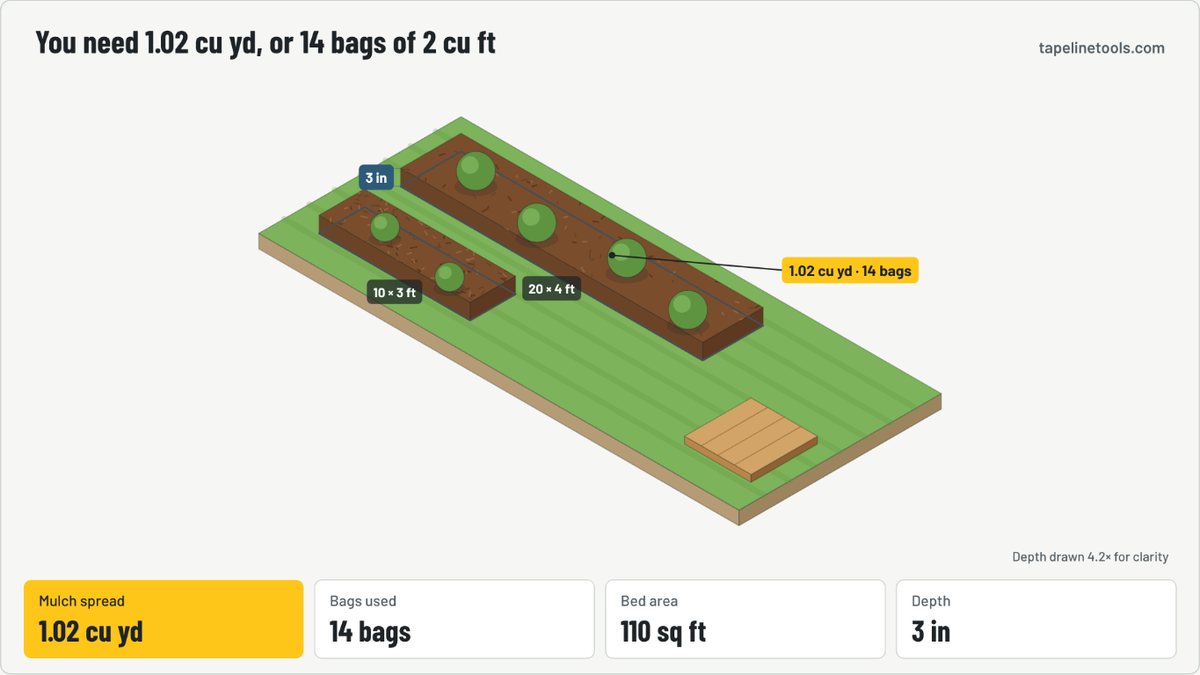
The animation and the step-by-step video above use your numbers. Here is the same walkthrough written out for the default example.
What you enter
- Beds: 20 × 4; 10 × 3 ft.
- Depth: 3 in. Two to three inches is common for weed suppression.
- Bag size: 2 cu ft.
What happens, step by step
- Bags empty from the pallet and a rake levels each bed in turn.
- At this depth one 2 cu ft bag covers about 8 sq ft.
- Bed area times depth: 110 sq ft × 3 in is 1.02 cu yd.
- 1.02 cu yd needs 14 bags, rounded up to whole bags.
The answer: mulch needed is 1.02 cu yd.
How it’s calculated
- Volume = Σ bed area × depth
- Cubic yards = ft³ ÷ 27; bags = ft³ ÷ bag size
Worked example
Two beds, 20 × 4 ft and 10 × 3 ft, 3 in deep, 2 cu ft bags.
Inputs
- Beds
- 20 × 4; 10 × 3 ft
- Depth
- 3 in
- Bag size
- 2 cu ft
- Bulk price per cubic yard
- 0 $/yd³
- Price per bag
- 0 $
Results
- Mulch needed
- 1.02 cu yd
- Or bags
- 14 bags
- Bed area
- 110 sq ft
Assumptions and limits
- Mulch is measured loose; it settles slightly after watering.
Verify the result against the applicable local code, adopted code edition, manufacturer instructions and project requirements. See our methodology.
Questions
How many bags of mulch in a yard?
One cubic yard is 27 cu ft: 13.5 two-cubic-foot bags or 9 three-cubic-foot bags.
How deep should mulch be?
Two to three inches for most beds. Keep mulch pulled back a few inches from tree trunks and stems.