What the animation shows
The animation and the step-by-step video above use your numbers. Here is the same walkthrough written out for the default example.
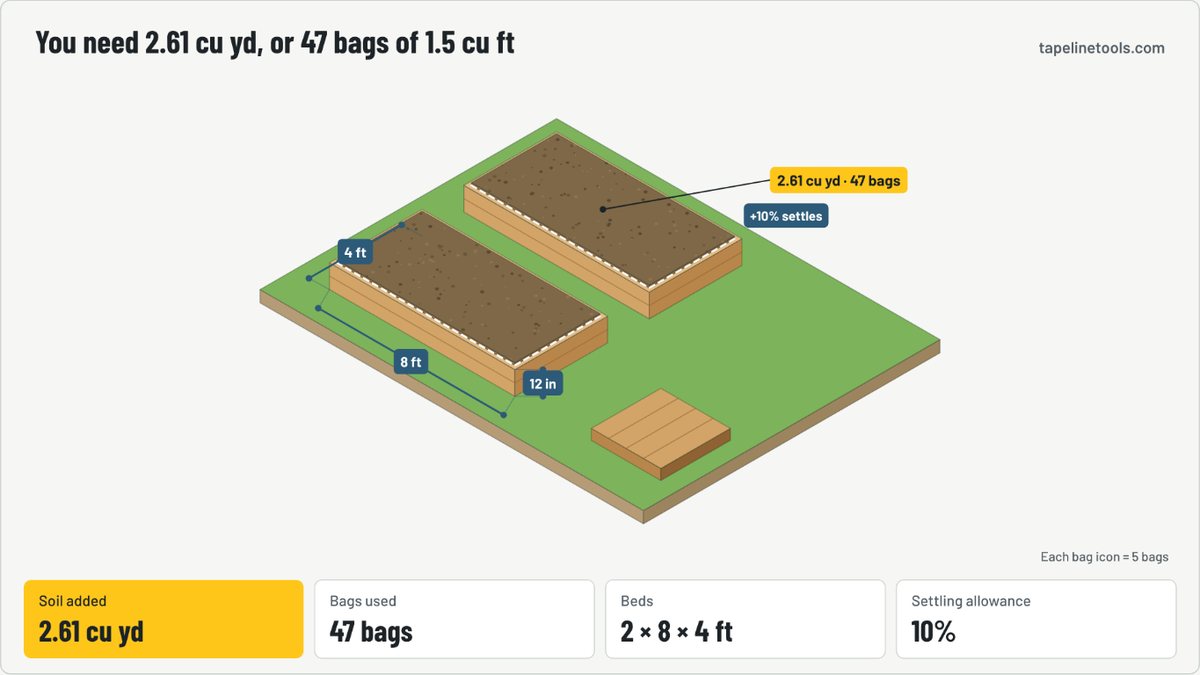
What you enter
- Number of identical beds or areas: 2.
- Length: 8 ft.
- Width: 4 ft.
- Fill depth or bed height: 12 in.
- Extra for settling: 10 %.
- Bag size: 1.5 cu ft.
What happens, step by step
- Soil fills each 8 × 4 ft bed to 12 in, one bed at a time.
- The 10% heap above the rim sinks back level as the soil settles.
- Each bed takes 35.2 cu ft, times 2 beds.
- 70.4 cu ft ÷ 1.5 cu ft per bag rounds up to 47 bags.
The answer: soil needed is 2.61 cu yd.
How it’s calculated
- Volume = beds × length × width × depth × (1 + settling %)
Worked example
Two 8 × 4 ft beds, 12 in deep, 10% settling, 1.5 cu ft bags.
Inputs
- Number of identical beds or areas
- 2
- Length
- 8 ft
- Width
- 4 ft
- Fill depth or bed height
- 12 in
- Extra for settling
- 10 %
- Bag size
- 1.5 cu ft
Results
- Soil needed
- 2.61 cu yd
- Or bags
- 47 bags
Assumptions and limits
- Soil settles 10–20% in the first season; many gardeners overfill slightly.
Verify the result against the applicable local code, adopted code edition, manufacturer instructions and project requirements. See our methodology.
Questions
How much soil for a 4×8 raised bed?
A 4 × 8 ft bed 12 in deep holds 32 cu ft, about 1.2 cubic yards. Add about 10% for settling.
Bags or bulk?
Bulk soil by the yard is usually cheaper beyond about one cubic yard, but you need a place to dump it.