What the animation shows
The animation and the step-by-step video above use your numbers. Here is the same walkthrough written out for the default example.
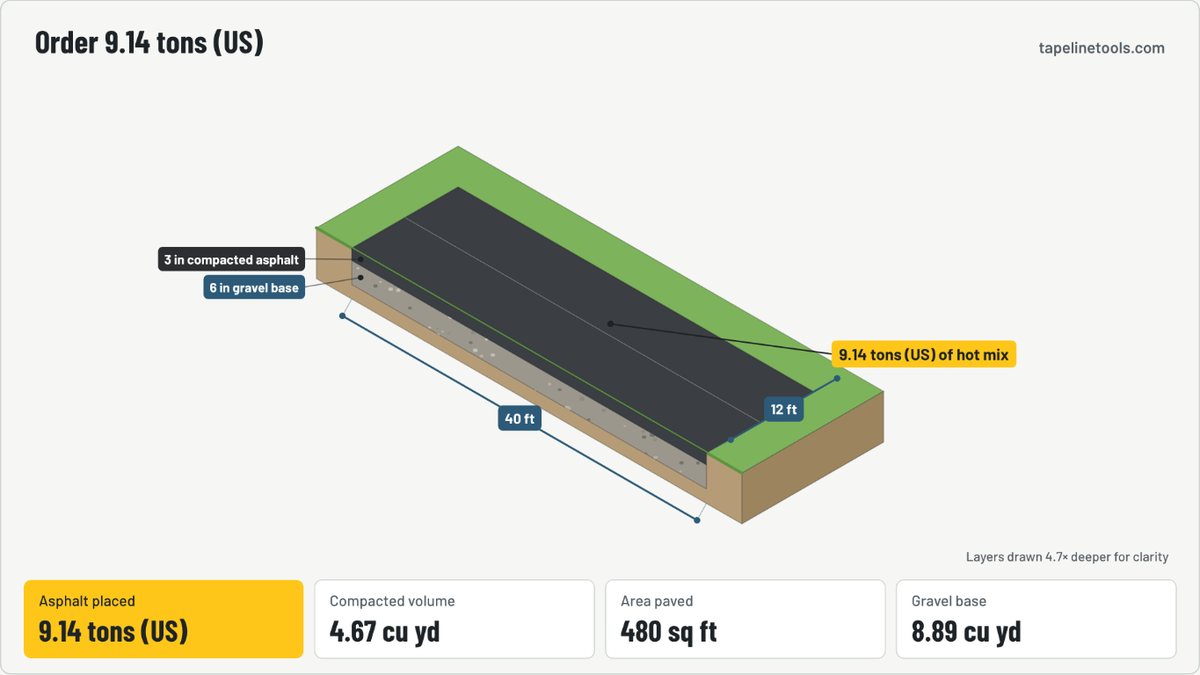
What you enter
- Areas: 40 × 12 ft.
- Compacted asphalt thickness: 3 in. Measure after rolling. Driveways are commonly 2–3 in; areas with heavy trucks need more.
- Compacted asphalt density: 145 lb/ft³. Compacted hot-mix asphalt typically weighs 140–150 lb/ft³ (about 110 lb per sq yd per inch). Use your plant’s mix design if you have it.
- Extra for edges and uneven base: 5 %. Paving crews commonly add 5–10% for edges, low spots and haul-off.
- Aggregate base depth (below asphalt): 6 in. Compacted crushed stone under the asphalt. 4–8 in is typical for driveways. Enter 0 to skip.
What happens, step by step
- A compacted base of 6 in of crushed stone comes first.
- The paver lays hot mix in passes, about 3 3/4 in loose.
- Area × 3 in + 5% is 4.67 cu yd of finished asphalt.
- The roller compacts each pass down to the finished thickness.
- At 145 lb/ft³ that weighs 9.14 tons (US).
The answer: asphalt to order is 9.14 tons (US).
How it’s calculated
- Area = Σ length × width
- Volume (ft³) = area × compacted thickness (ft) × (1 + waste %)
- Weight (lb) = volume × density (lb/ft³); tons = lb ÷ 2,000
- Cost = tons × price per ton; base = area × base depth
Worked example
A 40 × 12 ft driveway, 3 in compacted, 145 lb/ft³, no waste, $110 per ton.
Inputs
- Areas
- 40 × 12 ft
- Compacted asphalt thickness
- 3 in
- Compacted asphalt density
- 145 lb/ft³
- Extra for edges and uneven base
- 0 %
- Price per ton
- 110 $/ton
- Aggregate base depth (below asphalt)
- 6 in
Results
- Asphalt to order
- 8.7 tons (US)
- Compacted volume (with waste)
- 4.44 cu yd
- Paved area
- 480 sq ft
- Estimated asphalt cost
- $957.00
- Aggregate base
- 8.89 cu yd
Assumptions and limits
- US short tons (2,000 lb).
- Thickness is the finished, compacted thickness; loose mat is laid about 25% thicker and rolled down.
- Density is for compacted hot mix; loose truck volume is larger.
- Each area is a rectangle; add aprons and flares as extra rows.
Verify the result against the applicable local code, adopted code edition, manufacturer instructions and project requirements. See our methodology.
Questions
How many tons of asphalt do I need for a driveway?
A 12 × 40 ft driveway at 3 in compacted is 120 cu ft. At 145 lb/ft³ that is 17,400 lb, or 8.7 tons, before waste.
How much does a ton of asphalt cover?
At 145 lb/ft³, one ton covers about 80 sq ft at 2 in, 55 sq ft at 3 in, or 41 sq ft at 4 in thick.
How thick should an asphalt driveway be?
Residential driveways are commonly 2–3 in of compacted hot mix over 4–8 in of compacted crushed stone base. Soft or clay soils and heavy vehicles need more of both.