What the animation shows
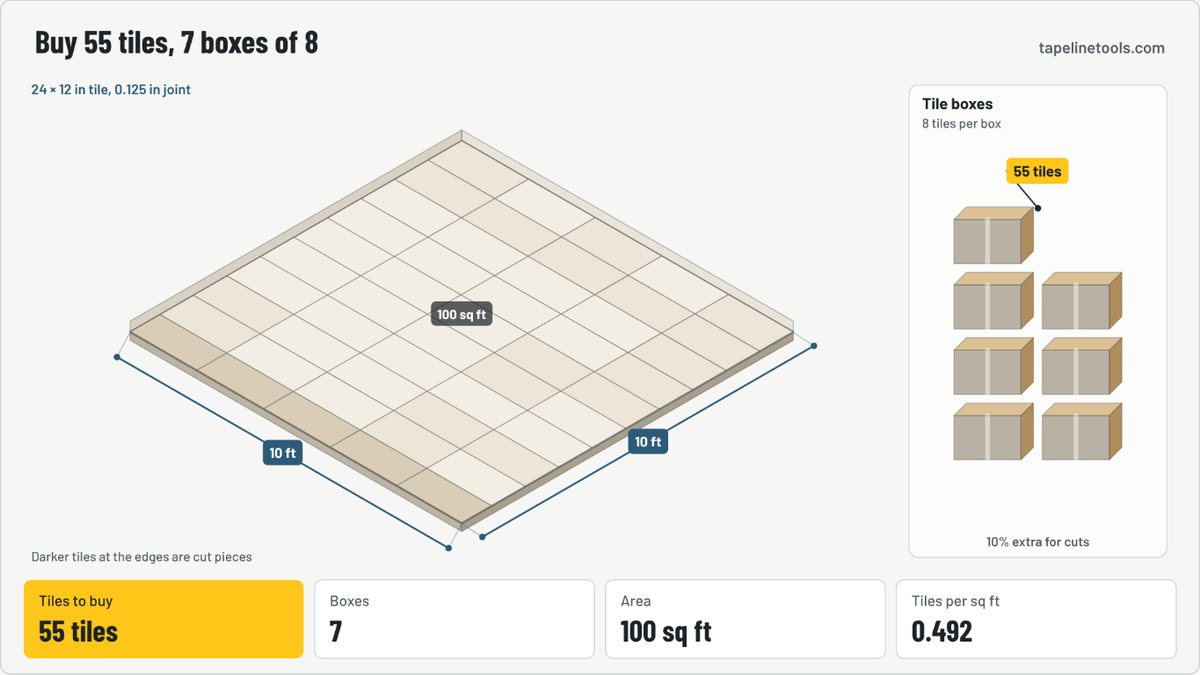
The animation and the step-by-step video above use your numbers. Here is the same walkthrough written out for the default example.
What you enter
- Rooms: 10 × 10 ft.
- Tile length: 24 in.
- Tile width: 12 in.
- Grout joint: 0.125 in.
- Waste allowance: 10 %.
- Tiles per box: 8.
What happens, step by step
- Each 24 × 12 in tile takes its size plus a 0.125 in grout joint.
- That is 0.492 tiles per sq ft, plus 10% for breakage and cuts.
- Tiles that hit the wall are cut; the darker ones are cut pieces.
The answer: tiles to buy is 55 tiles.
How it’s calculated
- Tile footprint = (length + joint) × (width + joint)
- Tiles = area × (1 + waste %) ÷ footprint, rounded up
Worked example
100 sq ft floor, 12 × 24 in tile, ⅛ in joints, 10% waste, 8 per box.
Inputs
- Rooms
- 10 × 10 ft
- Tile length
- 24 in
- Tile width
- 12 in
- Grout joint
- 0.125 in
- Waste allowance
- 10 %
- Tiles per box
- 8
Results
- Tiles to buy
- 55 tiles
- Boxes
- 7
- Area
- 100 sq ft
- Tiles per sq ft
- 0.492
Assumptions and limits
- Straight layout. Diagonal and large-format tiles often need 15–20% waste.
Verify the result against the applicable local code, adopted code edition, manufacturer instructions and project requirements. See our methodology.
Questions
How many 12×24 tiles per square foot?
One 12 × 24 in tile covers 2 sq ft; with a ⅛ in joint each covers about 2.03 sq ft.
How much extra tile should I buy?
10% for straight layouts, 15% or more for diagonal patterns, and keep a few spare tiles for repairs.