What the animation shows
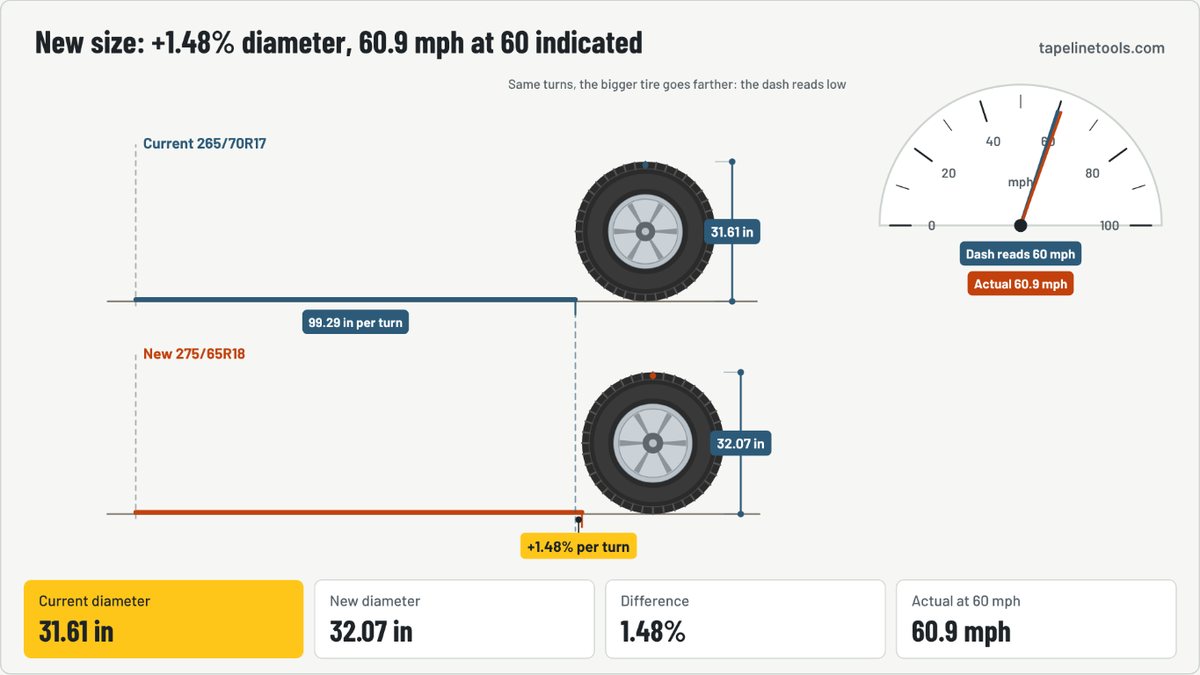
The animation and the step-by-step video above use your numbers. Here is the same walkthrough written out for the default example.
What you enter
- Tire width: 265 mm.
- Aspect ratio: 70 %.
- Wheel diameter: 17 in.
- Compare with a new size: Yes.
- New tire width: 275 mm.
- New aspect ratio: 65 %.
- New wheel diameter: 18 in.
What happens, step by step
- Each tire rolls one full turn; the line behind it is road covered.
- The 32.07 in new tire covers more road with every turn.
- So when the dash reads 60 mph, you really drive 60.9 mph.
- After one turn the new tire is 1.48% farther along.
The answer: overall diameter is 31.61 in.
How it’s calculated
- Sidewall (in) = width (mm) × aspect ÷ 100 ÷ 25.4
- Diameter = wheel + 2 × sidewall
- Revolutions per mile = 63,360 ÷ (π × diameter)
- Actual speed = indicated × new diameter ÷ old diameter
Worked example
Changing from 265/70R17 to 275/65R18.
Inputs
- Tire width
- 265 mm
- Aspect ratio
- 70 %
- Wheel diameter
- 17 in
- Compare with a new size
- Yes
- New tire width
- 275 mm
- New aspect ratio
- 65 %
- New wheel diameter
- 18 in
- Indicated speed
- 60 mph
Results
- Overall diameter
- 31.61 in
- Sidewall height
- 7.3 in
- Circumference
- 99.29 in
- Revolutions per mile
- 638.1
- New diameter
- 32.07 in
- Diameter difference
- 1.48%
- Actual speed at indicated speed
- 60.9 mph
Assumptions and limits
- Nominal unloaded dimensions. Real tires vary by model and inflation, and loaded radius is smaller.
Verify the result against the applicable local code, adopted code edition, manufacturer instructions and project requirements. See our methodology.
Questions
How tall is a 265/70R17 tire?
About 31.6 in in diameter, with a 7.3 in sidewall.
Will bigger tires change my speedometer?
Yes. A larger diameter covers more ground per revolution, so you travel faster than indicated.